


 Last winter, I mentioned it and here we are. Unless some really bad stuff happens, the news story you will be hearing about more than any other is this year’s Fourth of July. Six months from now marks the 250th anniversary of the nation and all I can say is that we “punked out.”
My question in March centered on what we were going to call this muddled mixture of monikers for the celebration. Back 50 years ago, the exclusive term was “bicentennial,” as in the second hundred years of existence for the United States. That year it was everywhere, celebrating a birthday for an entity that we did not even know if we could make work back in 1776. After all, there was a long shot war to be won. But Providence smiled on us and here we are.
Now we have a more problematic nomenclature for this next big anniversary. To quote an earlier column, “The official term for what we are all getting ready to go though is the “semiquincentennial”. Doesn’t quite roll off the tongue very easy, does it? Lucky us, there are other names by which it can be called, as well. “Bisesquicentennial” (though spell check does not recognize that word) is also a proper way to clock the anniversary. Don’t like either of those? There’s more. Try “sestercentennial” (spell check doesn’t like that one either).”
I’ve noticed that nobody even attempts any of those titles. I can understand why. Everybody just says “250th.” I thought there might have been an outside chance for the adoption of my favorite ‘way to say it,’ “quarter millennial” as in a fourth of the way to a 1,000 years. Still not as easy as bicentennial but is catchier than any of the alternatives, other than the very plodding, “250th.”
What does it mean that in six months, we will be that age? It means what all birthdays signify. We are getting older. And ideally, wiser. As a major milestone, the anniversary becomes a time to reflect and understand the meaning of our shared heritage as members of a democratic republic, along with the responsibilities it brings to each of us as members of the club.
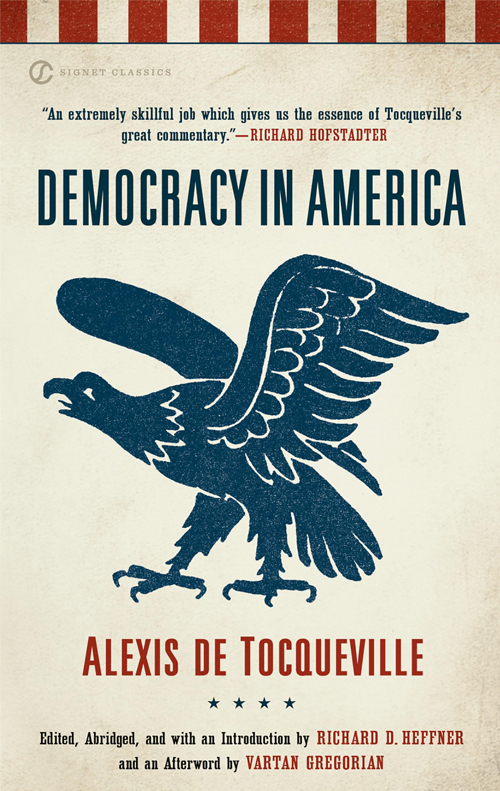
When French political observer Alexis de Tocqueville came to the United States some 55 years after the Declaration of Independence was first signed, he wrote on what he saw. “Democracy in America” voices the concerns he had over how liberty was not applied equally and of downside of the “tyranny of the majority,” (how those in power get when they like to tell everybody how they speak for the American people). He called it a “noisy and messy” system, but acknowledged that it was better than the alternative.
No matter what you call it, it still is.
Get ready to celebrate, and take stock.
Photos: Alexis de Tocqueville and his book that says, “no sooner does a government attempt to go beyond its political sphere that it exercises insupportable tyranny.”