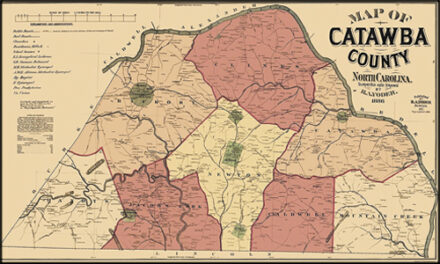


Sir Charles Cornwallis certainly did not know it when he waited for three days in Lincolnton, finally deciding to leave his supply trains behind in pursuit of General Nathanael Greene, but he was facing the unthinkable, surrender to the Americans.
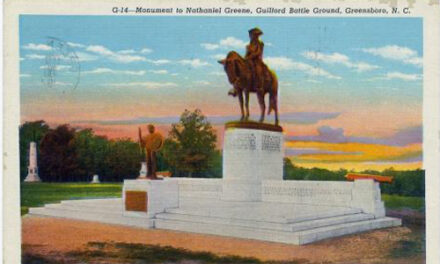
Cornwallis chased Greene almost to Virginia before the Continental general chose to give battle at Guilford Courthouse, a taxing encounter that forced to British army to head to Wilmington to refurbish their army. Neither Cornwallis nor his corps of officers could figure out how events had gone so completely against them. After taking Charleston and the battle of Camden which followed, all seem to be going as planned. Then the plan changed.
As Cornwallis and his Redcoats ambled up the east coast, still looking for Tory supporters to join his army and retake territory as part of the southern strategy, the war was beginning to look hopeless. The British army stumbled into Virginia, looking to redeem their fortunes and resolve the war, yet the momentum had swung the other way.
Along the entrance to the Chesapeake Bay, the French fleet blocked British entry and with it, assistance to Cornwallis. George Washington moved his troops south, ready to engage the British. Laying siege at Yorktown, Virginia, the British were bottled up and after after a few weeks of attempting escape the fight became un-winnable.
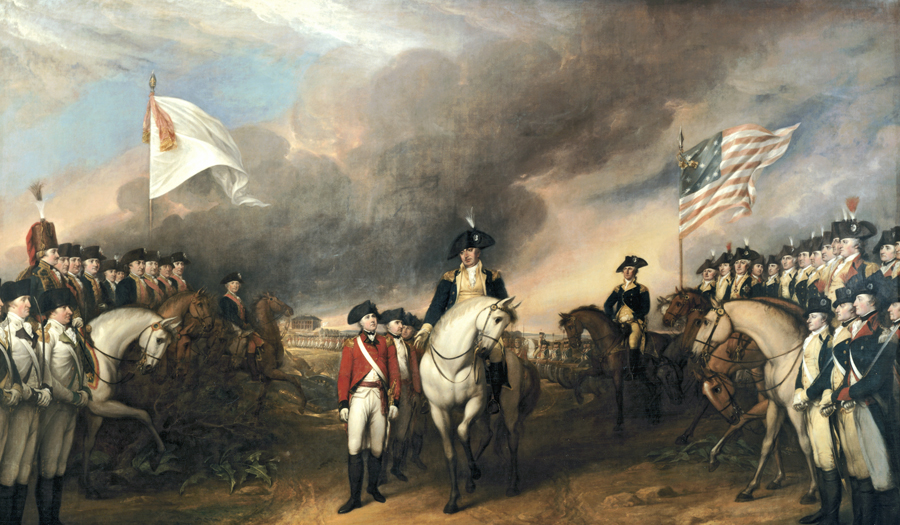
Photo: The surrender of Yorktown. That ain’t George Washington on that horse.
The 12-day siege, highlighted by American and French forces throwing everything they had at the British and their German mercenaries, resulted in Cornwallis asked for terms of surrender, signifying the end of his resolve to keep the conflict going.
The capitulation was a historic moment. No one had expected the Americans to successfully defend itself against the largest military organization in Europe, especially considering the might of the British Navy, unparalleled anywhere in the world. But with the help of the French, George Washington and his ‘never say die’ army had done it. They defied the odds and forced the Brits to quit.
The surrender ceremony was as momentous as the battle. Cornwallis feigned illness (and there was a lot of malaria going around). Washington (always a man who stood on ceremony) understood the slight. When Cornwallis’ replacement tried to give his sword (a symbol of capitulation) to French General Rochambeau, he nodded toward Washington, who wouldn’t take it either. Instead, he pointed toward Benjamin Lincoln, who had been on the other side of a surrender, when he was forced to give up Charleston to the British in May, 1780. Washington also denied the surrendering army the “honors of war” just as Cornwallis denied Lincoln when surrendering Charleston.
It took a while for the treaty to be negotiated and for the British to leave territory they had already taken. Finally leaving NYC and Charleston, the Brits fully acknowledged the loss and accepted the new day, one which the Americans worried might never come.