

We did it. We commemorated, we celebrated and now we have put the founding father’s to bed for another 50 years. The muskets are going back over the fireplace, the tricorns are being hung back on the hatrack and talk of history leaves the 18th century for other stories to be determined at a later date.
The founding of the nation, which has achieved so much recognition this summer can really be boiled down to two men who are the very reason we as these United States of America, came about in the first place. To make it easy, they are both named George.
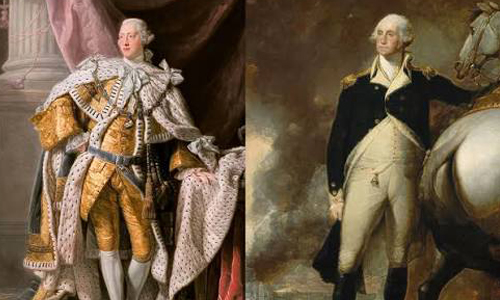
Photo: George III and his American counterpoint, George W.
First you have George III, 22-years-old when he ascended to the throne and had ideas of his own about how to rule the largest colonial power in Europe. He believed in the right of the monarchy to levy taxes on the colonies to pay for protection Britain had provided colonists against the French (who were allies of the Natives) in the French and Indian War, the American front of the Seven Years War. With 123 million British pounds to pay back, George supported the Sugar Act, the Stamp Act, the Townshend Duties and the taxation of tea, arguing it was still less than citizens in Britain were paying.
Americans didn’t see it that way. For two generations, through the reigns of George I and George II, the colonists had been allowed to do their own thing. They got used to it and when George III sought to take tighter control, they rose up against the crown. Through a series of Prime Ministers, George could not let go of Britain’s right of taxation, which brought war.
Meanwhile, another George, this one Washington, was a loyal soldier of the British Army. To make a name for himself, he tried rising through the ranks of the military only to see himself kept from leadership because he wasn’t born across the Pond. Because he was born in Virginia, when the war came he became the ideal candidate to lead a newly formed Continental Army since he was from the South, which showed solidarity among the colonies.
Washington lost more battles than he won but he always kept his army together, through privation of brutal winters, underfunding, defeat and desertion. He welcomed the help and advice of the French and when the unbelievable happened, American victory, this George resigned his commission, refusing to allow the colonies to trade one King George for another. So it made sense that when the Constitutional Convention came, he was elected head of it and eventually elected president of the new U.S. of A.
The two Georges are a study in contrasts. Both were a mixed bag of attributes and flaws. Both had admirable leadership skills that served them well enough. During the war and after, George III suffered from bouts of mental illness while Washington believed in the credo “all men are created equal” except for the enslaved he counted as his property. Both flawed. Both players.