T.S. Eliot famously begins his poem “The Waste Land” with the line, “April is the cruelest month.” For poets, though, April is often the coolest month, the month we are busiest, most visible, most read and talked about, maybe even most appreciated.
April is National Poetry Month. Of course, it hasn’t always been that way. Up until 30 years ago, there was no National Poetry Month, although many states and cities had previously declared particular months or days to be their Poetry Month or Poetry Day. In NC, for example, October 15 was designated Poetry Day by the Poetry Council of NC in 1952, and they continued conducting poetry celebrations on or near that date for 60 years.
In 1996, President Bill Clinton proclaimed that April would be National Poetry Month, which would “offer us a welcome opportunity to celebrate not only the unsurpassed body of literature produced by our poets in the past, but also the vitality and diversity of voices reflected in the works of today’s American poetry.”
As poetic as Clinton’s proclamation was, however, it wasn’t really his idea. National Poetry Month is, in fact, a registered trademark of the Academy of American Poets, who began promoting the concept a year before Clinton agreed and made it official.
Since then, lots of people have jumped on the National Poetry Month bandwagon, but the center of activity on a national level is still the Academy. One very worthwhile visit to their NPM page (https://poets.org/national-poetry-month) will familiarize you with all the related programs they sponsor, organize, or promote, including “Poem-a-Day,” the “Dear Poet Project,” “Poem in Your Pocket Day,” and a virtual gala, among others.
One might ask, why April? And if you examine the Academy’s FAQs regarding NPM, you will find a relatively straightforward answer there. If you’d like to engage a bit more with the possibilities, then you can read the more expansive answer offered by art historian, David C. Ward, in Smithsonian magazine a dozen years ago (https://www.smithsonianmag.com/smithsonian-institution/how-did-cruellest-month-come-be-perfect-30-days-celebrate-poetry-180950386/).
For most poets, April has become the one month they are most likely to be asked to do something of a public and poetic nature. I, for example, not counting the two routine monthly poetry events I coordinate, have 6 public appearances scheduled for April, 1 more than I have scheduled for the other 11 months combined. At least my loved ones know when to not schedule family trips or gatherings.
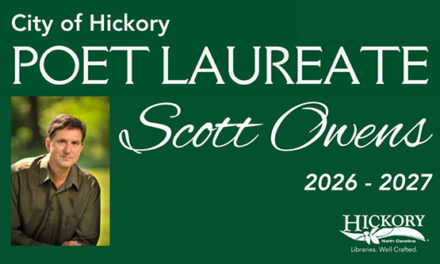
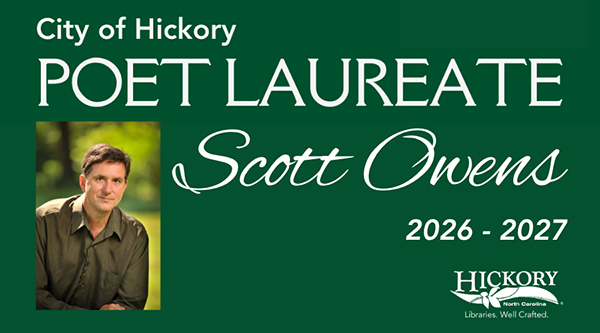
In Hickory, National Poetry Month events will include the 2nd annual Hickory Literary Festival at Patrick Beaver Memorial Library on April 25, the Hickory Poetry Salon also at PBML on April 21, and Poetry Hickory at Taste Full Beans Coffeehouse on April 14, where I will launch my 25th collection of poetry, The Song Is Why We Sing, the primary topic of which is, the practice of poetry.
Whether it’s writing, reading, listening, or just talking about poetry, I hope you’ll find a way to join the fun and enrichment of National Poetry Month. To help you get started, here is the final poem from The Song Is Why We Sing.
Afterword
When the book is finally done,
after years of writing and rewriting,
stopping and starting again,
doubting, fussing over commas
and prepositions, which image
is right and words never
as precise as you want them to be,
you want to take a moment
to relax, sit back, relish
what you’ve made against
the odds, the constant distractions,
constraints of time, but always
and almost instantly there is
an unease, insidious, pervasive,
as if the last one you wrote
could be the last one you’ll ever write,
and so you thrash about
in your mind grasping for any topic
worth getting down, any image,
word, phrase, line worth writing,
you stay up late, rise early,
take walks alone, eyes peeled
for the unexpected, inexplicable,
the meaningful familiar, you delve
into your past, trying to mine
once more what has worked before,
you pick up workbooks not touched
in years, try prompts you skipped,
read other poets you like,
listen in on strangers’ conversations,
jot down everything
until at last the work itself reminds you
what you’ve always found to be true,
work generates work,
writing generates writing,
love generates love.