
Earlier this month marked the anniversary of the bloodiest fight ever on American soil. Over 51,000 casualties resulted from the Battle of Gettysburg, fought for three days, July 1-3 and included a young man from Catawba County.
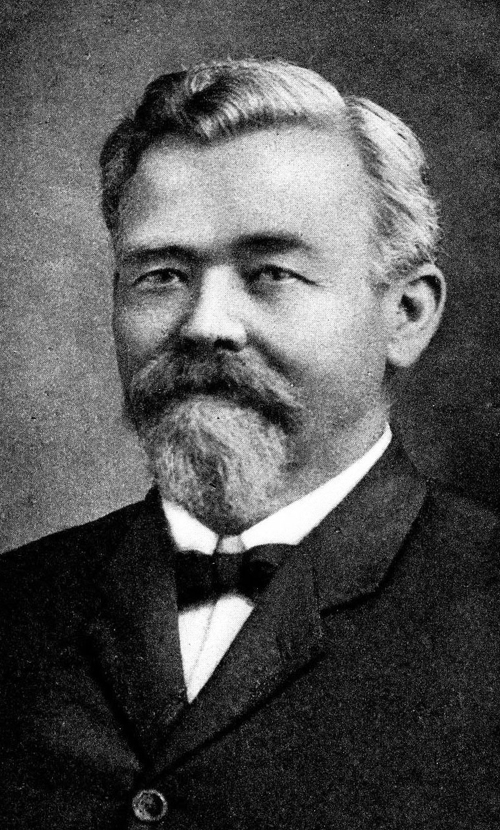
Photo: Abel Alexander Shuford, survivor of the Gettysburg battle.
Technically, the family name was Scheffert. The patriarch, Johann settled in the county before it was Catawba, or even Lincoln County. The house he built on the frontier needed holes in the wall to serve as gun ports to stave off Indian attacks. As the years passed, the family grew along with their holdings, which included land and the enslaved.
By the time the railroad came to Hickory Tavern in 1860, so did one of the clan’s young men. Over the years, the family name had been anglicized from the original German to Shuford and young A.A. (Abel Alexander) left the farm of his father for a career in business. He followed his big brother, Adolphus “Dolph” Shuford to town, working as a store clerk when the Civil War broke out.
At the age of 20, A.A. exchanged the apron of a retail employee for a soldier’s uniform. Along with several of his brothers, he volunteered for service in the Confederate Army. A.A. served in Company F of the 23rd North Carolina. He saw plenty of action.
Arriving too late to participate in the first big battle of the war, Manassas/Bull Run, his unit was there for the whole of the Peninsula Campaign that brought the Federal Army to the gates of Richmond (the Confederate capital) before being repulsed by a replacement commander, R.E. Lee. A.A. weathered a number of intense battles including the Maryland Campaign, Fredericksburg, and Chancellorsville.
The 23rd was marching its way to Harrisburg, Pennsylvania (the state capital) on Lee’s second invasion of the North, when it was recalled to a little town near the state’s southern border, Gettysburg. An inadvertent battle had broke out on the morning of the first. A.A. and his regiment could hear the sounds of musketry as they approached.
His regiment was under the brigade command of Alfred Iverson, who for dubious reasons did not lead the group into battle. Some say the general was inebriated. At a place known as Forney’s Field, units of the Federal I Corps rose up from behind a stone wall to decimate Iverson’s brigade. A.A. was fortunate that day. He was wounded and captured. Many of his comrades died on a part of the battlefield now called Iverson’s pits, the slaughter being so terrible that following the battle, the dead (of which there were many) numbered so many that the bodies were buried where they fell. They say crops grew taller there after that.
Following two years as a federal prisoner of war, A.A. Shuford was released when the fighting ended in 1865. He returned to Hickory and by 1880 started his own cotton mill. His business enterprises prospered. Shuford also mentored numerous young men who followed in his business footsteps, creating a vibrant entrepreneurial atmosphere that continued long past his death in 1912.