
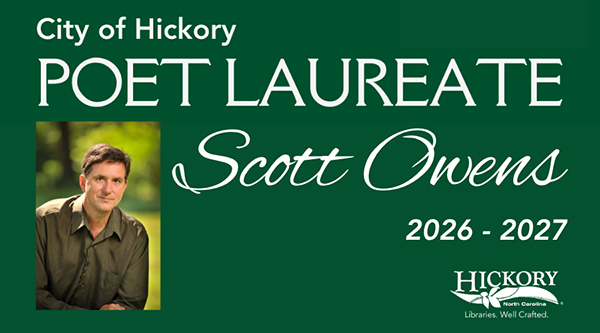
(Throughout my more than 40 year teaching career, I have often been impressed by what my students have written, enough so in fact, that I’ve helped more than 2 dozen of them publish at least one book, and probably close to a thousand publish a poem, essay, or story somewhere. However, I can’t say that I have often felt that a student understood how pursuing writing, which is to say, pursuing paying attention and tapping into the source of creativity feels to me. Last semester was different. Last semester I think one student got it and said it pretty well, creating a piece that is part ars poetica, part carpe diem, part fulfillment of Descartes’ famous, “cogito, ergo sum,” which is exactly what I think the writing process and what we gain from writing consists of. With his permission, I am using his freewrite for this week’s column in hopes that it will convey how “staying open” to the world of creativity feels, at least to me, and obviously to at least one other person as well.)
The Room Between Dreams
by guest columnist, Wolfgang Landers
I walk along a floor that ripples like molten glass, each step a negotiation with gravity, each breath a tremor that threatens to fracture the edges of my perception. Thoughts crawl under my skin like tiny, phosphorescent creatures, fragile as wings, too delicate to ever touch the surface of comprehension. I feel, for an instant, that I could reach the farthest stars, bend them to the tilt of my fingers, fold galaxies into the arc of a single heartbeat, but the fantasy collapses. I am nothing more than a flicker of awareness, a shadow cast against the indifferent glow of eternity, dispensable, vanishing in the vast hush between pulses.
Mirrors stretch endlessly along the corridor, and in each reflection my face mutates: youthful, aged, grotesque, unfamiliar. Sometimes, in those shifting features, I glimpse the spark of creation: a poem, a melody, a constellation of thought spun from nothing but my trembling imagination. Yet to name it is to summon expectation, and expectation is a blade that slices the fragile membrane of possibility. Another reflection reminds me: the universe does not notice absence, and any other mind could conjure what I might attempt, perhaps with greater ease, perhaps with brighter clarity. I feel simultaneously infinite and infinitesimal, capable of wonder yet entirely replaceable.
And yet, beneath the tremor of despair, a subtle insistence hums: a pulse of consciousness, a fragile insistence that my perception, my sensation, even my fleeting presence, is not entirely without resonance. I imagine the wind brushing against my skin as a confidant, whispering both invitation and caution, urging me to surrender or endure. Freedom, I sense, is not a single leap but a slow attunement: the recognition that each act of imagination, no matter how small, is a defiance against indifference, a rebellion against erasure.
Words spill from me in darkness, twisting and folding upon themselves, refusing linearity. They are imperfect, fragmentary, ephemeral, but they carry the faint shimmer of life, the echo of possibility. Perhaps I shall never witness their full embodiment; perhaps no one will notice. And yet the act itself, extending thought into the void, tracing beauty along the surface of emptiness, constitutes its own quiet triumph. The gesture of creation is enough, tenuous though it may be, a faint flicker against the infinite night.
In dreams I turn corners and step into shadowed alleys where the blade might find me, or where I might dissolve into the dark without resistance. And always, in the pause before surrender, there is a paradox: brilliance and ordinariness intertwined, promise and futility folded together, the edge of ecstasy brushing against the precipice of oblivion. I am terrified, yet exhilarated. The tension is exquisite, the awareness that each breath carries both the weight of potential and the lightness of impermanence.
I long to speak, yet the syllables choke in my throat. I long to be seen, to have the subtle tremor of my hands, the pulse beneath my ribs, recognized for what it is: a fragile act of existence, a testament to both fragility and persistence. And still, even in silence, a whisper lingers: something, somewhere, acknowledges the trace of thought, the echo of consciousness, the faint shimmer of being that insists upon itself.
Some nights, absence calls with seduction; the abyss glimmers with an enticing finality. Yet the world folds endlessly upon itself, weaving continuity from what seems like void, asserting that even the tiniest spark—my thought, my fleeting inspiration—participates in the vast rhythm of existence. Each line I write, each moment of self-awareness, is a trace, a ripple, a testament that I am present, if only briefly, in the ocean of being.
I do not know whether significance awaits, or whether my presence will dissolve unnoticed. Yet still I endure. Still I imagine. Still I extend trembling fingers toward the intangible, shaping what I may, glimpsing, fleetingly, the beauty of persistence. Even sparks that vanish leave their light behind, however briefly, and even in the darkness, the tremor of consciousness asserts itself: I am, I feel, I create, I endure. And perhaps this dream like insistence is enough.