

The Big Bang of Country Music. Where did it happen? How did it happen? What did it sound like? All those questions can be answered by a ride up Highway 181 through the mountains of Burke County (past the Brown Mountain Overlook) to Bristol. You know that town, half in Tennessee and half in Virginia.
Next year marks the centennial of the launch of recorded country music as an industry. And in the town where it happened is a wonderfully equipped museum that tells the story but more importantly, lets you hear what it sounded like. At the Birthplace of Country Music Museum, you can experience the impact of those first recording sessions.
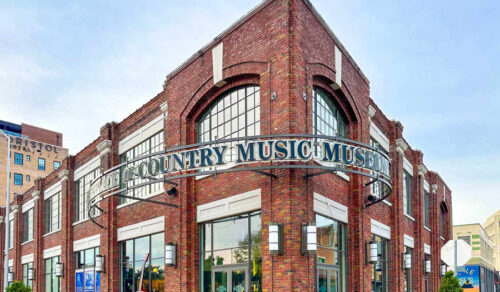
Photo: The Birthplace of Country Music, In Bristol, TN/VA. A great day trip.
Here’s an example. Singer, guitarist Jimmie Rodgers rode over from Asheville in the hot summer of 1927 to “sing into a can” (as they said in Oh! Brother). His yodel became a sensation from those records and inspired singers for the next century to try their own version. His arrival in Bristol was pivotal, creating the first superstar in what would become called ‘country music.’
It all started when music producer Ralph Peer came to the region to hear more of the traditional mountain music that folks played in the hills of NC, TN, and VA. He set up a studio in an old hat factory (now torn down) and invited musicians to come record. Over a two week period some 76 songs were recorded by almost 20 acts. When some were released to the public, they sold well. Next year, he came back for more.
In searching for a name to call this particular genre of music, the term “hillbilly” was used from this inception right up until it changed after WWII to “country and western.” By then, it was a popular form of entertainment and could be heard in honky-tonks all over the country, not just Appalachia.
The longest legacy from the Bristol Sessions has to be the Carter Family. The group consisted of A.P. Carter, his wife Sara, and her cousin Maybelle. Unique for not only having a woman as the lead singers, the guitar genius of Mother Maybelle influenced perhaps more pickers than Jimmie Rodgers yodeling did with vocalists. Her daughter June Carter had a career of her own with her sisters before she married Johnny Cash. The couple had a son, John Carter Cash who narrates some of the exhibits in Bristol.
The museum is well worth the two hour ride. You can hear how microphones changed the sound of recorded music as well as create your own mix of instruments. It’s so interactive that you can add your own voice as part of the various permanent exhibits within. Many more that Rodgers and the Carters are featured, which is a highlight of the museum. Hear Pop Stoneman, who was already a popular singer in 1927. In fact, it was at his urging that Peer came to Bristol. Other acts too are surprising finds.
If you go in September, the town shuts down for a music festival that includes Sierra Ferrell, Del McCrory, Acoustic Syndicate, and the Darrell Scott String Band. But no matter when you go, you will hear all kinds of good music, some of it taking you back a century, some freshly made.