
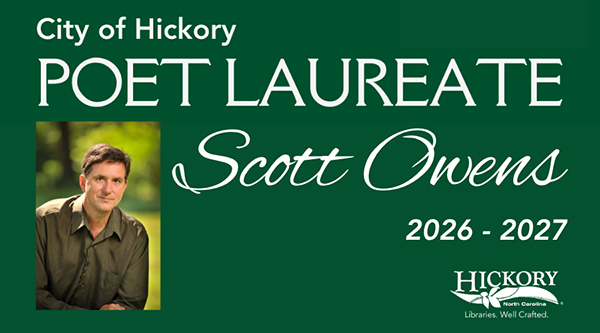
I think paying attention is the most important thing a poet can do. Obviously that can have a lot of different meanings and manifest in a lot of different ways. Sometimes it’s paying attention to what’s going on in the world politically; sometimes it’s paying attention to what’s going on inside mentally or emotionally; sometimes it’s noticing connections between things; sometimes noticing details; sometimes noticing the significance, meaning, importance of something small, something often taken for granted or seen as meaningless. Wonderful poems often arise just from noticing something and granting it significance and running with the possibilities that significance creates.
“Existential Knot” is one of the fastest poems I’ve ever written. It came literally from picking up a piece of knotted string from my yard and letting my imagination play with the question of why I noticed it at all. From initial observation to final poem took a little under an hour. The important parts of the process in writing this one were paying attention to my attention (noticing what I was noticing), and then getting out of the way, i.e. holding off any preconceived notions I had about what a poem should look like or what it should do to be a good poem. I did go back after the first few drafts and manipulate the stanza breaks to heighten the “existential” component of the poem, and to repeat the pun on “knottiness,” but aside from that I left it almost as it came, a poem about a piece of string (at least on one level).
Existential Knot
I picked up a knot from the ground today,
not an important knot,
not of significant size,
not of any significance really,
at least not initially,
but then I realized if not for the knot
I likely would not have noticed it at all.
In fact, the knot would have just been
a string, not of any special size,
not of any noticeable color,
not anything special about it at all,
but the fact that it was tied into a knot
made it not exactly like every other
unknotted expanse I’d seen.
Of course, I thought about unknotting the knot
but ultimately decided not to,
as the knottiness was exactly what made it
exactly what it was and continues to be,
a knot not like any other,
insured by its knottiness
not be left unnoticed.
While the concept of paying attention has been a cornerstone of my writing practice and my teaching about poetry for decades, I have to admit that I didn’t conceptualize its importance on my own. I didn’t even truly recognize that paying attention was what I was doing until I read it in a poem by Mary Oliver. In “The Summer Day,” she writes:
I don’t know exactly what a prayer is.
I do know how to pay attention, how to fall down
into the grass, how to kneel down in the grass,
how to be idle and blessed, how to stroll through the fields,
which is what I have been doing all day.
And later in the poem, she adds, “Tell me, what is it you plan to do / with your one wild and precious life.” That imperative, to live consciously, intentionally, with awareness, became my own, and I’ve attempted to pass it on to others through my teaching, my essays, my poetry, and even my parenting and grandparenting, as expressed in this one:
The Way to More
Out walking with my grandson
he asks for more flowers.
I tell him to keep looking,
and soon we see more flowers.
He asks for more dogs.
I tell him to keep looking,
and soon we see more dogs.
He asks for more water.
I tell him to keep looking,
and soon we cross the creek again.
In my own life
I sometimes ask for more answers,
and when I remember to keep looking,
I always seem to find them.