

In front of next year’s national birthday, American historian and filmmaker Ken Burns has unleashed another monumental history lesson. This time, he tells the well-known story of how the United States of American came to be in his 12-hour sojourn, “The American Revolution: An Intimate History.” It’s on PBS.
The limited series presents the stories we know, and a few we don’t, of how the improbable happened. How did a gang of colonies that hugged the Atlantic Ocean get the idea that they could separate from perhaps the most powerful nation in the world, at least the one with the widest grip, and engage in self government? Watch and see.
Most history books will tell you the same thing, but as is Ken Burns’ specialty, he combines voice, image and story to create an inspiring mood, one that does not divert too much from the standard telling. My only issue with the work is that of balance. Along the way, one episode deals with just six months of the struggle. That’s OK, I like the part about the weeds and as an avid viewer, expected more of that. However, when it came to the ‘Southern Strategy’, which is where the British seriously miscalculated (not their first mistake) the majority of the fight down south gets short shrift, even though it is the culmination of the war.
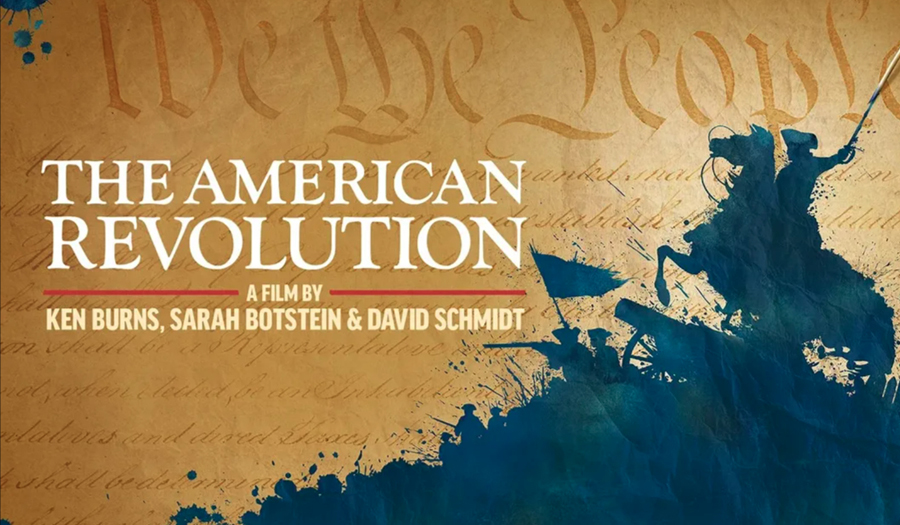
Photo: The American Revolution: An Intimate History
Perhaps it is living where we live, near some of the best battlefields of the conflict, that I expected the turning point of the Revolution to be treated like the turning point of the Revolution, complete with a full telling. Thomas Jefferson referred to Kings Mountain as “the turn of the tide of success.” As significant as northern victories at Trenton, Princeton, and Saratoga were, Kings Mountain and Cowpens stand as the moments when the all-powerful British saw that their grip on the colonies had fully slipped from their grasp. The documentary details the battles, but with less detail and consideration than their significance merits.
Guilford Court House just gets a mention but not much more, as it seems the series is in a colossal hurry to wind itself up. Though the British held the field, Patriots under Nathaniel Greene severely bloodied the Redcoats, who lost a quarter of their men. It was a Pyrrhic (lost more than they won) victory. Cornwallis had to limp with his army to Wilmington for resupply, putting his army on a collision course with Washington that led to Yorktown and surrender.
As Jefferson alluded to, the war in the South was the determining factor that made victory possible, which unfortunately did not get the airtime it deserved in the wider story of the war. Burns and company correctly point out that the American Revolution set the stage for independence movements throughout the world, making this effort a blueprint for freedom. Perhaps Ken Burns’ first big documentary, on the American Civil War cast a longer than expected shadow over this one, since it would be less than a century before the grandsons of those southern Patriots would ignite a war for their own ill-fated independence.
Still, the documentary is worth viewing, an origin story for all Americans as we near a quarter-millennial in age.