
The British always knew they were superior. With the northern portion of the rebellion at a stalemate, Sir Henry Clinton turned south for support (and troops) to head up the east coast and squash any thoughts of independence held by the Patriots. By the middle of 1780, the plan was going swimmingly.
Despite a loyalist loss at Ramsour’s Mill in June with no officer from the King’s army present, the cause of the Crown rolled along just like the Redcoats envisioned; So well in fact that Cornwallis scattered his troops as he moved into North Carolina sweeping up support and putting down opposition. In turn, Major Patrick Ferguson held the same confidence that he would have an easy time gaining recruits. His strategy? Scare them.
Ferguson issued a proclamation that asserted real men fought with him. Patriots were cowards and if the wives and daughters of those who joined Washington’s side did not wish to be associated with such vermin, as Ferguson termed them, he had a safe place for the womenfolk. It was intended to shake the fence-sitters and give staunch Patriots a moment of pause to reconsider. Instead, it had the opposite effect.
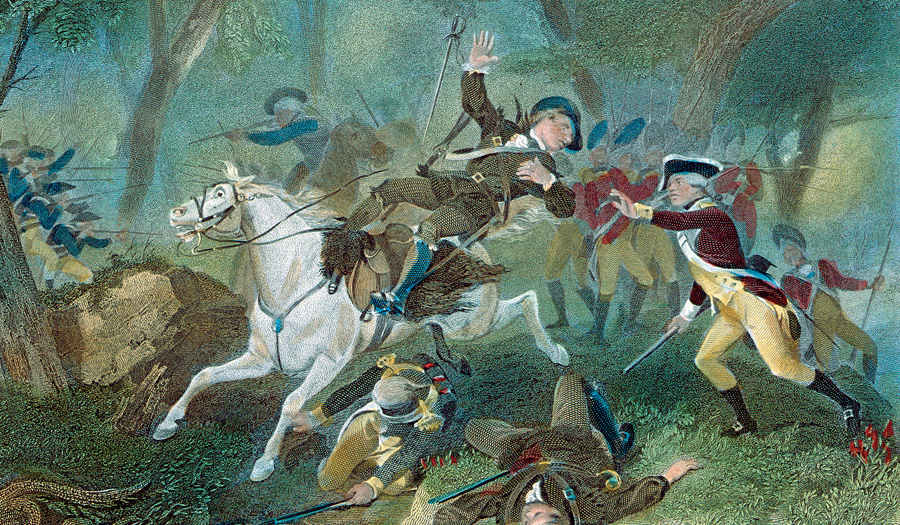
Photo: Ferguson pays for his insult at the Battle of Kings Mountain
Numerous backwoodsmen, many who had not participated in the war so far, were incensed. They took exception, banded together and came looking for Ferguson. A group from around here gathered at the Weidner Oak (near Robinson Road) to join the Patriot cause. Gathering strength as they converged, these Overmountain Men hunted the British major to make him pay for his insult. Ferguson and his all-volunteer group of loyalists camped on a hillock just across the border in South Carolina. He drilled these men and swore “God and all his little angels” could not drive him from Kings Mountain, he said.
By the seventh of October, Ferguson had about 1,100. That morning, the Patriots reached nearby Cowpens, looking for the Tory (loyalist) army. Around 900 men including those who would become known as leaders of the independence movement with names you know (Winston, Shelby, McDowell, Sevier) surrounded Kings Mountain. Colonel William Campbell told his impromptu army to each serve as their own commander and “do the best you can.” At 3 pm they started up the hill.
The battle lasted only about an hour. While Ferguson’s men shot over the heads of their attackers generally, the Patriots took dead aim. Ferguson, riding a white horse and attempting to keep his new army in order with a whistle he used for troop movement, led the final charge. Seven Overmountain Men claimed they took him off that horse. He died on Kings Mountain and the remainder surrendered. I guess he was right. They never removed him from that mountain.
The aftermath of the battle was ugly. Ferguson’s body was desecrated in urinary ways. Some of the Tories were hung, the rest paroled with explicit instructions to go home and stay out of the war. Looking back, Thomas Jefferson called the battle “the turn of the tide of success” that kept the British “southern strategy” from winning the war. Instead, the cause lived to fight another day and would ultimately find success in the founding of a new form of government that endures.