
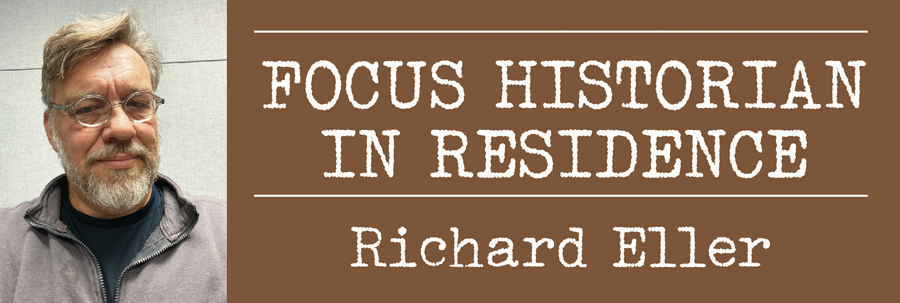
Over the next week, there will be not one but two opportunities to come out and discuss history. First, this Saturday, your humble Historian in Residence and his co-author, fellow historian Suzanne Mayo will be at Patrick Beaver Library to discuss our new work, Whiskey-Fueled: Hickory Tavern, Prohibition and Racing. The event will be at 3pm and the discussion will be centered around the subject of the book. Ms. Mayo and I will attempt to make the link between Hickory and its role in the spawning of southern stockcar racing.

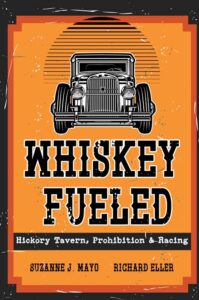
 The book tackles the origin of Hickory, its development as a center for commerce including the alcohol trade, some of the fierce fights that came with what some called the biggest controversial subject of the late 19th century. For example, in 1889, the city voted in leadership that they thought was dry (non-drinking) that turned out to be wet (pro-alcohol). It was a tumultuous time in the city’s history. Only when the state went dry in 1908 and the nation followed in 1920 was the rule set. And even then, options remained. Ever heard of a “blind tiger?” You will if you show up Saturday afternoon.
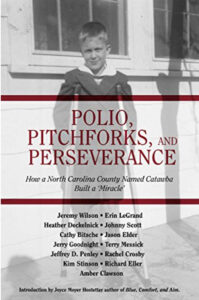
Next week, on Tuesday night, December 9, at the Belk Centrum, on the campus of Lenoir-Rhyne University (doors open at 5:30), WFAE is coming to town to celebrate 30 years of its involvement with what goes on in and around Hickory. There will be all the official recognition stuff, along with a taping of “Charlotte Talks”, the weekday talk show hosted by Mike Collins. The topic of the episode will be on the region’s most significant historical occurrence, the 1944 Polio Epidemic. There will be a panel discussion that will include yours truly and Dan Moury, a former patient at the hospital, whose father captured the only color film of the daily therapy going on at the hospital.
The event has come to become known as “the Miracle of Hickory” because of the outpouring of assistance by the local community over spread of a disease that most people had no idea of how it was transmitted. They only knew that (mostly) children were being killed or maimed by the mysterious malady and their help was needed. So they pitched in, to the surprise of the National Foundation for Infantile Paralysis, which came down from New York to lead the medical response.
Despite the grave nature of the subject matter, the Hickory Emergency Polio Hospital is celebrated for its low mortality rate, which was under three percent when in Chicago a year earlier, the death rate was five points higher. Quite an accomplishment. You might even call it a miracle.
Both events demonstrate the lively past of Hickory, a deep cultural prominence to which we are the inheritors. Come on out to either event, or both and we can talk history.
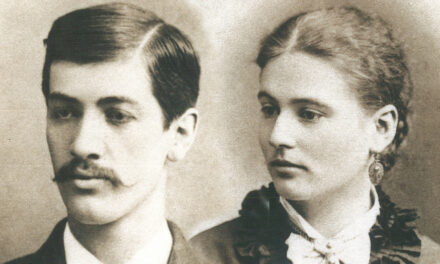
Photos: Eller & Mayo, along with the covers of the books under discussion.