

 They had never heard of George Washington, or Valentine’s Day, or the 4th of July. Their diet was mostly cornbread, cooked on an open fire, for that was the only method available. They cleaned whatever meager clothing they had by slapping their duds against a rock, having no idea that a washboard even existed. These people were so backward they had never heard the sound of a piano or the taste of ice cream. Ignorant, but proud, that’s how Miss Pauline Abbott described people who lived along the Brushy Mountains of North Carolina and her mission was to bring civilization to them.
Pauline Abbot may have had good intentions when she told a Cincinnati newspaper reporter her assessment of people in Caldwell County. The statements were made in an attempt to raise money for a school she ran near Hudson. Perhaps her words were meant to stir the hearts of givers so that they would open their checkbooks and contribute. In doing so, however, she ignited a clash that almost got her killed.
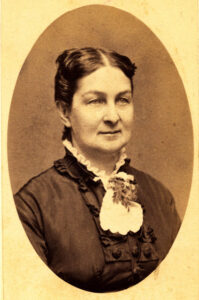
Oberlin Home and School had been in existence since 1898, started by Emily Prudden, an educational missionary who at age 50, left the comforts of a wealthy life to help children open their minds to the world around them. Emily’s mission field was the Carolinas. First, Miss Prudden went to Chester, South Carolina where she put her efforts toward teaching the children of the formerly enslaved.
Before her career was over, Prudden spawned 15 schools in NC and SC, including academies in Gastonia, Blowing Rock and Kings Mountain. Here’s how it generally worked. She would find a community that she believed would benefit from a school, raised funds to build and staff it (along with some money of her own) and get the endeavor going before moving on to the next one.
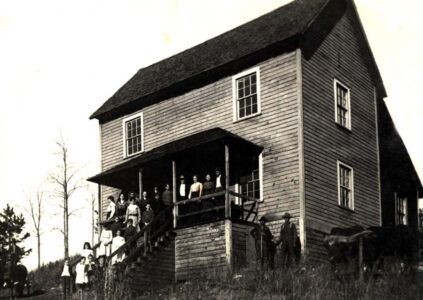
Over on Lick Mountain, near Hudson, Prudden bought land in 1885 and oversaw construction on the Oberlin Home and School, an institution that boarded girls and allowed boys to attend during the day. In the days before NC had an established school system, it was an opportunity for imaginative students to learn to read, write and consider larger questions of the world that surrounded them.
The turn of the 19th into the 20th century was a period of great change in America. After the Civil War, the northeast industrialized rapidly. Inventions that would revolutionize the standard of living were a constant occurrence. Electricity, the recording of sound and image, the use of steel to create major cities soon established this nation as a leader. However the South, after losing the war had been left out of much of the wave of change.
Prudden sought to bring education to the South as a means of including all Americans in the newfound prosperity of the Victorian Age. Through the church, to which she deeded all her schools once she got them established, she was an agent for change.
Everyone liked Emily Prudden and the work she was doing and it was all going well, until Pauline Abbott took over in Hudson and made her regrettable statements that sparked a war on Lick Mountain.
Next week, the battle.
Photos: Emily Prudden and the school she established near Hudson.